


Who's Coming
Who's Coming
Schedule
Dates and Venue
Late Spring, 2027
UID Bali Campus,Kura-Kura, Bali
Note: Speakers are not confirmed and this is only a draft agenda
Program at a Glance
Day 1 — Arrival & Welcome (Half Day)
4:00 – 7:00 PM
Registration & Sign-In & Walk-in Tour
6:00 – 6:45 PM
Balinese Sound Bath Experience / Dance-Music Performance
7:00 – 9:00 PM
Welcome Buffet Dinner & Program Review
Day 2 — Neuroscience of Faith
7:00 – 7:30 AM
Services & Movement (Faith Denominations)
7:30 – 8:30 AM
Networking Breakfast
8:30 – 9:00 AM
PLENARY: The Neuroscience of Faith — State of the Art (McNamara)
9:00 – 10:00 AM
PANEL: Neuroscience of Faith — Respondents & Discussion
10:00 – 10:30 AM
Contemplative Break
10:30 – 11:00 AM
PLENARY: Sound, Space, and Sensing the Unfathomable
11:00 – 12:00 PM
PANEL: Sound, Space, and Sensing the Unfathomable — Respondents & Discussion
12:00 – 2:00 PM
Networking Lunch
2:00 – 2:30 PM
PLENARY: Ethics & Technology in Human Flourishing (Podina)
2:30 – 3:30 PM
PANEL: Ethics & Technology — Respondents & Discussion
3:30 – 4:00 PM
Contemplative Break
4:00 – 6:00 PM
Workshops (Solicited) — e.g., Religion & Medicine
6:00 – 7:30 PM
Free Time
7:30 – 8:15 PM
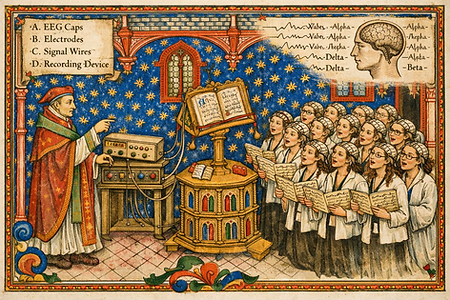
Neuro-Experiential Session: Gregorian Chants & Neural EEG
8:15 – 10:00 PM
Buffet Dinner / Industry Insight / Bali-Inspired Spiritfrees
Day 3 — Faith, Medicine, Art & Synthesis
7:00 – 7:30 AM
Services & Movement (Faith Denominations)
7:30 – 8:30 AM
Networking Breakfast
8:30 – 10:00 AM
Multi-Faith Conversation: Faith & Flourishing (Religious Perspectives)
10:00 – 10:30 AM
Contemplative Break
10:30 – 12:00 PM
Conversation: Faith & Flourishing (Medical Perspectives)
12:00 – 2:00 PM
Networking Lunch
2:00 – 3:30 PM
Conversation: Faith, Art & Healing
3:30 – 4:00 PM
Contemplative Break
4:00 – 5:00 PM
PANEL: Flourishing Indices
5:00 – 6:30 PM
Doctoral Consortium — Trainees Report to the Conference
6:30 – 7:15 PM
POEM-RITE: The Primeval Poet (Transmedia Opera)
7:15 – 9:00 PM
Farewell Dinner & Closing Ceremony
Day 1
+
Arrival & Evening Program
4:00 – 7:00 PM
Registration & Sign-In & Walk-in Tour
Pick up your welcome package and settle in. Informal networking with fellow participants.
6:00 – 6:45 PM
Balinese Sound Bath Experience / Dance-Music Performance
Sensory / contemplative experience
A guided sound bath or traditional Balinese performance to close the evening, drawing on the rich contemplative and artistic traditions of Bali.
Facilitator: TBD
7:00 – 9:00 PM
Welcome Buffet Dinner & Program Review
Sensory / contemplative experience
A communal dinner with remarks from the conference chairs, setting the tone for the entire meeting. An opportunity to introduce the mission, themes, and expected outcomes, and to orient participants to the conference structure.
Sir Gordon Duff
Jose L. Contreras-Vidal, PhD — Director, NSF IUCRC BRAIN Center, University of Houston
Cokorda Bagus Jaya Lesmana, PhD — Udayana University, Indonesia
Faheem Ershad, PhD — University of Houston
Day 2
+
Early Morning
7:00 – 7:30 AM
Services & Movement
Faith denomination-based offerings
Optional early morning services and movement practices organized by faith denomination. All participants are welcome to observe or join any tradition.
Denominations: Hindu, Muslim, Catholic, Buddhist, Protestant, Confucianism, Jewish Observances
7:30 – 8:30 AM
Networking Breakfast
Breakfast with optional short reflections from faith denomination leaders on the morning’s practice and its connection to the conference themes.
Morning Session — The Neuroscience of Faith
8:30 – 9:00 AM
Moderator: Jose Contreras-Vidal, University of Houston
PLENARY: The Neuroscience of Faith — State of the Art
Theme: How does faith engage the brain?
Plenary Keynote (30 min)
A review-article-caliber keynote surveying the current landscape of neuroscience research on religious and spiritual practices. Topics include neuroimaging of meditation, prayer, and ritual; the neurobiology of belief; and open questions for the field.
Patrick McNamara, MD — National University & Boston University Medical School
9:00 – 10:00 AM
PANEL: The Neuroscience of Faith — Respondents & Open Discussion
Panel (5 min statements each + open discussion)
Invited respondents react to the keynote with brief statements on gaps, challenges, and priorities, followed by open floor discussion. Respondents receive slides in advance.
Laura Upenieks, PhD — Sociology at Baylor University: “Bridging the Divide: Science, Faith, and the Sociology of Religious Disaffiliation”
Nathan S. French, PhD — Department of Comparative Religion, Miami University
Andrew Newberg, PhD — Thomas Jefferson University — Neuroimaging of meditation, prayer and belief
Ian M. Church, PhD — Hillsdale College — Experimental philosophy of religion
Stella Christie, PhD — Tsinghua University — Science, Music, & Brain (East Asian perspective from Cokorda)
10:00 – 10:30 AM
Contemplative Break
Culture-based experience (e.g., guided tai chi, walking meditation, Balinese movement)
Coffee and tea available for those who prefer a traditional break.
Morning Session — Sound, Space, and Sensing the Unfathomable
10:30 – 11:00 AM
Moderator: Faheem Ershad, University of Houston
PLENARY: Sound, Space, and Sensing the Unfathomable
Theme: How do we quantify, measure, and synchronize brain, body, and faith practices?
Plenary Keynote (30 min)
Wearable and mobile neurotechnologies for studying faith practices outside the lab. Topics include soft bioelectronics, mobile EEG/brain-body imaging, ecological momentary assessment, and multimodal physiological monitoring.
Jonathan Berger — Stanford University – Sound, Space, and Sensing the Unfathomable
11:00 – 12:00 PM
PANEL: Sound, Space, and Sensing the Unfathomable — Respondents & Open Discussion
Panel (5 min statements each + open discussion)
Respondents address feasibility, deployment challenges, and cross-cultural considerations for neurotechnology in faith-practice research.
Woon Hong Yeo, PhD — Georgia Tech — EEG bioelectronics, pediatric research
Jay Sanguinetti, PhD — University of Arizona — Focused ultrasound neuromodulation + meditation
Mohammad Amin Saraei, PhD — University of Connecticut — fMRI/physiological studies on Muslim prayer
Song Sen, PhD — Tsinghua University — East Asian perspective (connectomics, neural circuits, neuroaesthetics)
David M. Greenberg, PhD — Bar-Ilan University / University of Cambridge — Music, brain & behavior; big-data studies, music-based clinical treatment
Afternoon Session — Ethics & Technology
12:00 – 2:00 PM
Networking Lunch
TBD
2:00 – 2:30 PM
Moderator: Erika Anderson — IEEE AI and Human Flourishing Working Group
PLENARY: Ethics & Technology in Human Flourishing
Theme: What are the ethical implications of technology in human flourishing?
Plenary Keynote (30 min)
Ethical frameworks for studying faith with neurotechnology. Topics include responsible innovation, responsible acquisition and use of human data, cultural sensitivity, neuroethics of measuring inner experience, and policy implications.
Ioana R. Podina, PhD — University of Bucharest
2:30 – 3:30 PM
PANEL: Ethics & Technology — Respondents & Open Discussion
Panel (5 min statements each + open discussion)
Laura Cabrera, PhD — UPenn — Neuroethics, responsible human data use (Western perspective)
Tamami Fukushi, PhD — Tokyo Online University — East Asian neuroethics perspectives
Judy Illes, PhD, FRSC, FCAHS — University of British Columbia — Global neuroethics frameworks
Iffat Elbarazi, PhD — UAE University — Religion and brain health, Global Brain Health Survey
Arif Satria, PhD — IPB University and Indonesia National Research Agency — National Governance Frameworks (Indonesia, from Cokorda)
3:30 – 4:00 PM
Contemplative Break
Optional guided experience. Coffee and tea available.
Late Afternoon — Workshops
4:00 – 6:00 PM
Workshops (Solicited) — Religion & Medicine
Parallel workshops, ~90 min each
Hands-on workshops proposed by participants and invited facilitators.
Stuart Nelson, MA — Institute for Spirituality and Health, Texas Medical Center
Additional workshop proposals solicited via conference website
Evening Program
6:00 – 7:30 PM
Free Time
Personal time for rest, exploration, or informal networking. Contemplative Room and Exhibit remain open.
7:30 – 8:15 PM
Neuro-Experiential Faith Session: Neural Dynamics of Gregorian Chants
Live faith practice with neural recording (45 min) + Discussion
A live demonstration pairing Gregorian chant with real-time neural data collection — making the neuroscience of faith tangible for all participants.
Alexis Kutarna, PhD — University of Saint Thomas — Liturgical music
Jose Contreras-Vidal, PhD — IUCRC BRAIN Center — Neural recording
Additional sessions solicited from participants for Thursday
8:15 – 10:00 PM
Buffet Dinner / Industry Insight / Bali-Inspired Spiritfrees
Mocktail reception (sponsor opportunity)
Evening dinner with optional industry lightning talks. Alcohol-free in respect of the conference’s interfaith character.
Sponsor: TBD
Day 3
+
Early Morning
7:00 – 7:30 AM
Services & Movement
Faith denomination-based offerings
Optional early morning services and movement practices organized by faith denomination. All participants are welcome to observe or join any tradition.
Denominations: Hindu, Muslim, Catholic, Buddhist, Protestant, Confucianism, Jewish Observances
7:30 – 8:30 AM
Networking Breakfast
Breakfast with optional short reflections from faith leaders.
Morning Session — Multi-Faith Conversation
8:30 – 10:00 AM
Moderator: Stuart Nelson (Institute of Spirituality and Medicine)
Conversation: Faith and Human Flourishing - A Religious Perspective
Theme: How does faith and spiritual practices impact human flourishing? A religious perspective
Multi-faith conversation (faith leader focused, ~90 min)
A moderated conversation among religious leaders from diverse faith traditions, exploring how their communities understand the relationship between spiritual practice and human flourishing.
Mayjen TNI (Ret.) Wisnu Bawa Tenaya — General Chairman of the Parisada Hindu Dharma Indonesia, PHDI (Hindu)
KH Yahya Cholil Staquf — Executive Council of Nahdlatul Ulama (Muslim)
Fr. Bienvenido F. Nebres, SJ — President Emeritus, Ateneo de Manila University (Catholic)
Khangser Rinpoche — Dipkar United States (Buddhist)
Lobsang Kunchen (Nome Monastero) — Foundation for the Preservation of the Mahayana Tradition (Buddhist)
Reverend Jacklevyn Frits Manuputty — Chairperson of the Communion of Churches in Indonesia (PGI) (Protestant)
Xue Shi (Bp.) Budi Santoso Tanuwibowo — General Chairman of the Supreme Council for the Confucian Religion in Indonesia (MATAKIN) (Confucian)
Rabbi Angela W. Buchdahl — Senior Rabbi, Central Synagogue (Jewish)
10:00 – 10:30 AM
Contemplative Break
Optional guided experience. Coffee and tea available.
Morning Session — Faith in Medicine
10:30 – 12:00 PM
Conversation: Faith and Human Flourishing - A Medical Perspective
Theme: How does faith and spiritual practices impact human flourishing? A medical perspective
Conversation (~90 min, global perspectives)
A conversation among clinicians and researchers on how faith and spirituality are being integrated into medical practice worldwide. Must not be US-centric — seeking global voices.
Paolo Cianconi, MD, PhD — Department of Neuroscience, Catholic University of the Sacred Heart — Western Perspective
Kun-Woo Park, MD, PhD — Department of Neurology, Korea University Anam Hospital — East Asian Perspective
Giancarlo Lucchetti, MD, PhD — School of Medicine (Geriatrician), Federal University of Juiz de Fora — Latin American perspective
Victor Counted, PhD — Professor of Psychology, Regent University — African perspective (African Flourishing Initiative, Harvard Human Flourishing)
Afternoon Session — Faith, Art & Healing
12:00 – 2:00 PM
Networking Lunch
TBD
2:00 – 3:30 PM
Moderator: Clay Marsh (MD), West Virginia University
Faith, Art & Healing
Theme: How do faith and art promote healing?
Conversation (~90 min)
Exploring the deep entanglement of faith traditions with the arts — sacred music, visual art, ritual movement, religious painting, and architecture — and how these artistic practices can be harnessed for healing and human flourishing.
Imam Abdullah Antepli — President, Rothko Chapel, Houston, TX
Alexis Kutarna, PhD — University of Saint Thomas — Liturgical music (Catholic perspective)
Stella Christie, PhD — Tsinghua University — Science, Music, & Brain (East Asian perspective from Cokorda)
Dharm P. S. Bhawuk, PhD — University of Hawaiʻi at Mānoa — Culture's influence on creativity: the case of Indian spirituality (Hindu perspective)
Rajan Sankaran, MD (Hom) — When Skill Meets Soul – How Doctors Become Healers (Hindu perspective)
3:30 – 4:00 PM
Contemplative Break
Optional guided experience. Coffee and tea available.
Late Afternoon — Flourishing Indices & Synthesis
4:00 – 5:00 PM
Moderator: Joan Romaine, LGPC (NIH)
PANEL: Flourishing Indices - State of the Art
Theme: How do we assess human flourishing across cultures?
Panel (10 min statements each + open discussion)
An integrative session examining existing frameworks and proposing extensions toward a comprehensive Human Flourishing Index.
Byron Johnson, PhD — Institute for Global Human Flourishing, Baylor University: Global Flourishing Report
Rym Ayadi, PhD — City University London/Euro-Mediterranean Economists Association (EMEA): Global Brain Capital Index
John Helliwell — University of British Columbia: World Happiness Report
Helene M. Langevin, MD — NIH NCCIH Former Director: Whole Person Health Index
Paweł Świeboda — NeuroCentury / Brain Capital Alliance: Brain capital & brain economy
James O. Pawelski, PhD — Positive Psychology Center, University of Pennsylvania: Humanities & Human Flourishing
5:00 – 6:30 PM
Doctoral Consortium — Trainees Report to the Conference
Student & postdoc reporting session
Selected doctoral students and postdocs who served as scribes throughout the conference present their synthesis of key themes, open questions, and emergent directions. This feeds directly into the conference whitepaper.
Consortium members: Selected by invitation
Evening Program
6:30 – 7:15 PM
POEM-RITE: The Primeval Poet (Transmedia Opera)
A live demonstration pairing Gregorian chant with real-time neural data collection — making the neuroscience of faith tangible for all participants.
Fabricio Cavera Farfan — University of California, Irvine — Peruvian Perspective/Multimedia Artist
7:15 – 9:00 PM
Farewell Dinner & Closing Ceremony
A closing celebration with final remarks, synthesis of conference outcomes, announcement of next steps including the whitepaper timeline, pilot study planning, and future convenings
Conference Chairs: Jose L. Contreras-Vidal, Faheem Ershad
DRAFT — This document is a working draft. Schedule, speakers, and session details are subject to change.